Why Alert Fatigue Is Increasing in Compliance Teams
95-98% of flagged messages are false positives.
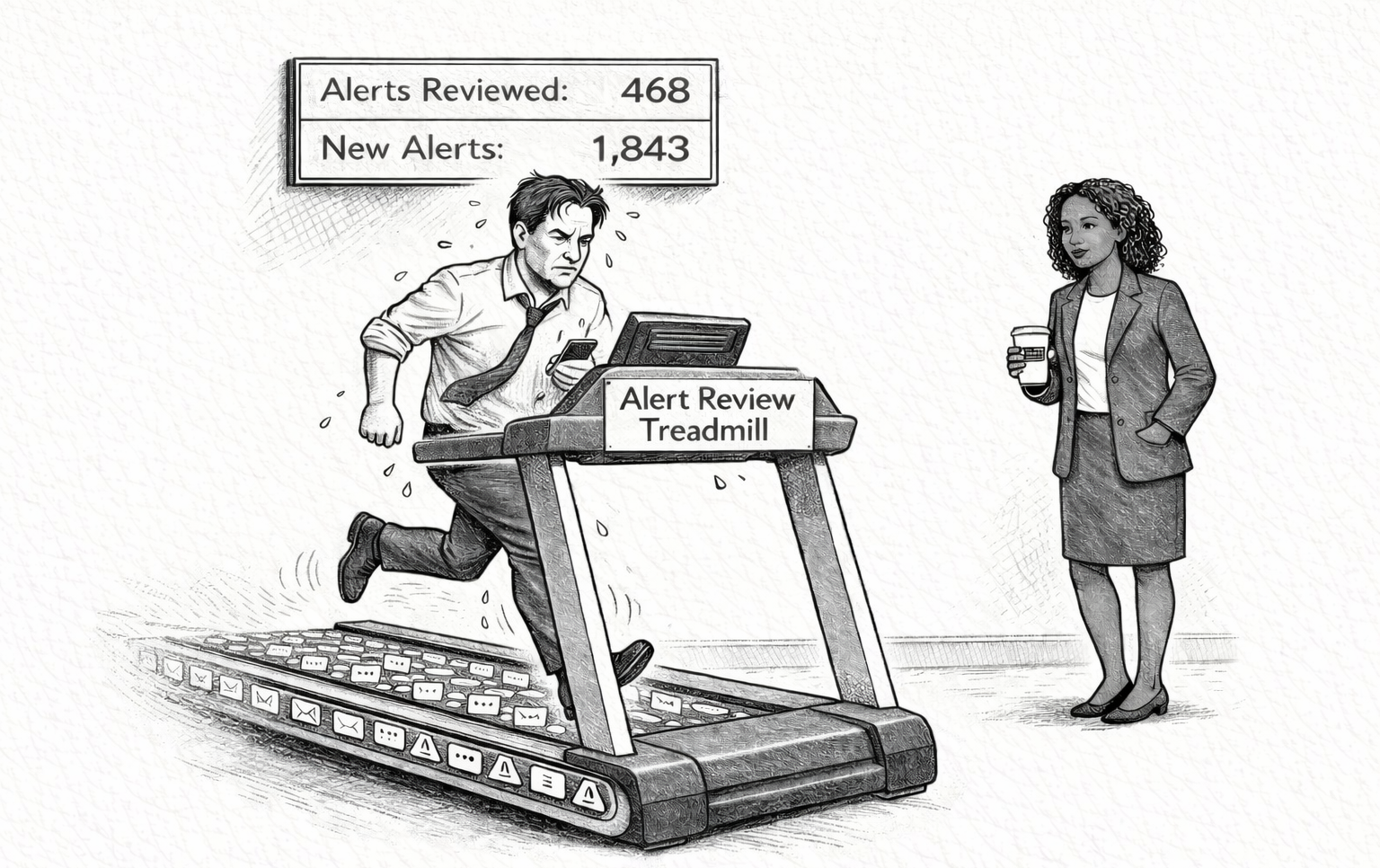
As digital communications evolve to meet client expectations, compliance teams are facing a sharp increase in content flagged for review. Recent studies estimate that 95–98% of flagged messages are false positives. As a result, compliance teams spend valuable time clearing low-risk messages instead of focusing on communications that present real regulatory risk. This pressure comes amid increased regulatory enforcement of record-keeping requirements and growing off-channel communication risk.
The root cause is how communications are flagged. Many compliance tools rely heavily on keyword lexicons that trigger alerts whenever certain terms appear, regardless of how those words are used. As communication volume increases, false flags multiply.
 Keyword-based systems flag language, not intent.
A compliant phrase like “returns are not guaranteed” can still be flagged, driven by the word “guaranteed” rather than the actual meaning.
When keyword-driven flagging occurs across thousands of daily communications, compliance teams pay the price in personnel and time.
A Different Approach to Communications Supervision
Legacy systems rely on keyword lexicons that flag content based on isolated terms. Archive Intel’s contextual AI evaluates how language is used within the communication.
Contextual AI:
- Analyzes surrounding text and intent
- Reduces false flags by over 99%
- Reduces the volume of communications requiring manual review, saving time and operational cost
- Maintains human-in-the-loop supervision
By filtering false flags before they reach compliance review, Archive Intel restores focus to the supervision process. Compliance teams spend less time clearing alerts and more time investigating communications that truly require attention.
Contextual AI vs Keyword-Based Supervision
| Contextual AI | Keyword-Based Supervision |
| Evaluates how language is used in context | Flags messages when specific words appear |
| False flags reduced by over 99% | High volume of false positives |
| Low-risk messages filtered before compliance review | Large review queues driven by low-risk alerts |
| Compliance teams focus on communications that present real regulatory risk | Compliance teams spend time clearing low-risk alerts |
| Contextual analysis with human-in-the-loop supervision | Requires ongoing keyword lexicon management |
2 Questions for Compliance Leaders
-
Does the system identify risk in context, or rely on outdated keyword lexicon lists?
-
Does the system capture all communication channels, including text messages from personal devices using native apps, or will your firm need to evaluate and purchase additional solutions?
Rethinking the Source of Alert Fatigue
Alert fatigue is often discussed as a staffing or operational challenge, but the issue frequently originates with how communications are flagged. When large volumes of false flags dominate review workflows, the technology is solving the wrong problem.
Compliance software should help teams identify meaningful risk, not generate more alerts. When communications are evaluated in context rather than through isolated keywords, compliance workflows become more manageable and real risk signals are easier to identify.
Supervision technology should help compliance teams focus on what matters most: identifying meaningful regulatory risk, maintaining effective oversight, and protecting both firms and their clients.