The U.S. Securities and Exchange Commission (SEC) recently updated its Marketing Rule FAQ, clarifying how certain provisions of Rule 206(4)-1 should be applied in practice. While the rule itself remains unchanged, guidance issued on January 15, 2026 provides clearer parameters around testimonial eligibility and the presentation of fees in performance advertising, areas RIAs should review closely.
What This Means for RIAs
Below are the key clarifications and how firms should adjust their compliance approach.
1. Certain Disciplinary Histories Are Not Automatically Disqualifying
RIAs may compensate individuals for testimonials or endorsements even if the individual has been subject to a final order from a self-regulatory organization, provided that all of the following conditions are met:
- The order did not bar, suspend, or prohibit the individual from acting in any capacity
- The individual has fully complied with the terms of the order
- The advertisement includes clear disclosure of the order, including a link or reference to the full document, for a period of ten years
This clarification provides firms with greater flexibility when working with third-party promoters who have minor or dated regulatory histories. However, the responsibility remains with the firm. Compliance teams must verify eligibility and ensure disclosures are complete, accurate, and readily accessible.
2. Model Fees Are Not Required, but Fee Transparency Remains Critical
The SEC also addressed confusion surrounding the use of model or hypothetical fees in performance advertising. Some firms believed they were required to recalculate historical performance using higher, assumed, or model fees if those fees exceeded what was actually charged.
The guidance clarifies that model fees are not mandatory. However, when there is a material difference between historical fees and the fees expected to apply to the intended audience, firms must ensure that performance presentations are not misleading.
Depending on the facts, this may require firms to:
- Present both actual and model net performance figures
- Clearly disclose all fee assumptions
- Provide appropriate context based on the intended audience
The emphasis is on whether the presentation is fair, balanced, and transparent. There is no prescribed formula.
3. Practical Steps for Compliance Teams
These clarifications signal continued regulatory focus on how marketing materials are reviewed and approved. Compliance officers should consider the following actions:
- Review all paid testimonial and endorsement arrangements against the clarified eligibility criteria
- Confirm that disclosures related to any self-regulatory organization (SRO) orders are prominent and properly linked
- Reassess performance marketing materials to ensure fee representations are clear and defensible
- Update internal review and pre-approval workflows as needed
- Provide refresher guidance to marketing and client communications teams
Regulators increasingly expect firms to be able to explain and document not only what was approved, but why the presentation was reasonable and not misleading.
Simplifying Oversight as Marketing Rules Evolve
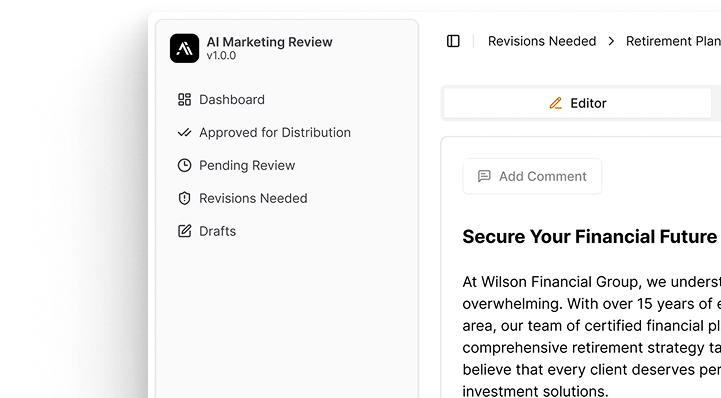
As marketing expectations continue to evolve, RIAs need oversight that reduces regulatory risk without introducing operational friction. Archive Intel’s AI Marketing Review solution helps compliance teams:
- Automatically flag testimonial risks and performance claims based on SEC guidance
- Suggest compliant language alternatives directly within content
- Route materials through a built-in review and approval workflow with time-stamped audit trails
The result is a clearer, more defensible review process that keeps marketing and compliance aligned.
Ready to streamline your compliance review process?
Schedule a demo to see how Archive Intel supports SEC-compliant marketing without slowing your team down.