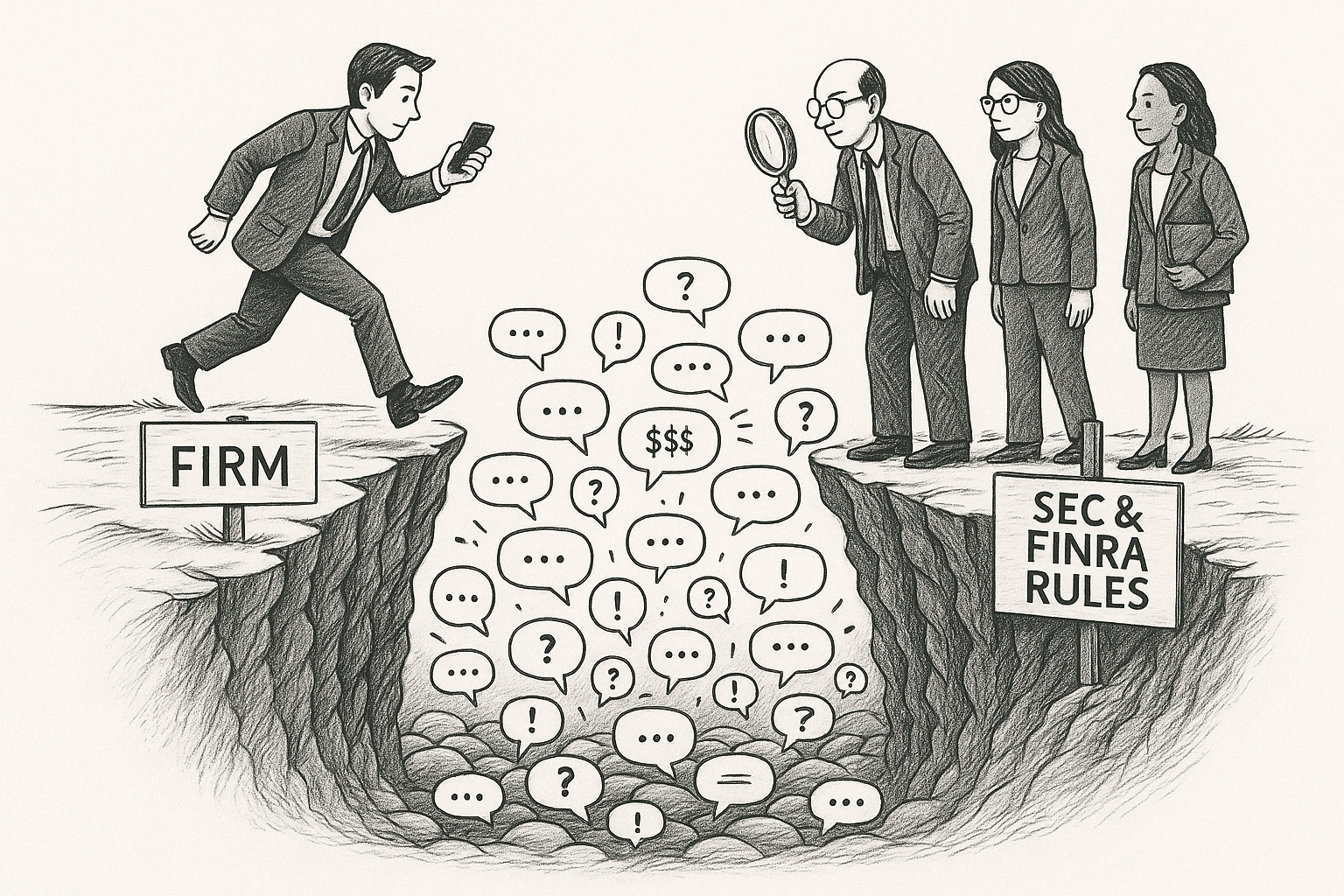
Off-channel communications continue to drive regulatory enforcement actions. The challenge for most firms is not a lack of rules. It is the disconnect between those rules and the technology firms rely on to manage communications oversight. The fix is modernizing the text capture process: approving the channel, defining what counts as business communication, and replacing manual capture with reliable, scalable systems.
Off-channel communications continue to receive intensive scrutiny during regulatory audits, and firms are feeling the impact. When violations occur, the consequences reach far beyond fines and create real reputational and operational risk. The challenge is keeping pace with how people communicate while maintaining consistent oversight and reducing the strain on compliance and supervision teams.
Texting is now a core business channel for investors, but oversight often breaks down in the everyday exchanges firms don't expect. A quick update. A scheduling text. A client question sent after hours. These messages slip through gaps in legacy systems and become exam findings.
Firms are trying to protect advisors, protect clients, and maintain reliable communication records. The problem is not a lack of rules. The problem is the disconnect between those rules and the technology firms rely on to manage communications oversight.
Following are best practices your firm can adopt to modernize outdated text processes with scalable, reliable systems.
Confirm texting is an approved, supervised channel
Before texting clients, advisors should know whether their firm has enabled compliant texting on personal devices. Regulators expect all business communication to be captured and retained. If texting isn't approved, every conversation runs the risk of becoming off-channel.
Archive Intel supports this approach with BYOD text whitelisting that empowers advisors to use personal devices while maintaining complete, audit-ready records.
Respond the right way when clients text
If texting is permitted, respond on the approved channel. If it isn't, redirect the conversation or notify compliance so the interaction can be captured correctly. The goal is consistency. Regulators expect firms to show that communication policies are followed the same way every time, not only when it's convenient.
Archive Intel helps firms maintain this consistency across iMessage, WhatsApp, and Android texting in one supervised workflow.
Define what counts as a business text
Firms should clearly define what qualifies as business communication. Informal messages can still be subject to retention. A simple scheduling text about an investment meeting may need to be captured, and ambiguity increases risk for advisors.
Clear definitions support consistent oversight and reduce uncertainty during exams.
Strengthen policies with training and random reviews
Policies only work when advisors understand them. Training should include real examples of what to do when clients text questions or requests. Random reviews reinforce accountability and show regulators that oversight is active and reliable, not predictable or scheduled.
Archive Intel saves firms time by automating random reviews through its AI, routing content to compliance without adding steps for advisors.
Prevent off-channel creep
Features like disappearing messages, talk-to-text, or unsanctioned apps can introduce new risk if firms aren't prepared. Advisors should understand that any tool used for business may create a recordkeeping obligation, even if the format changes.
Modern supervision systems need to capture communication behavior as it happens, not only when it's convenient.
Replace manual capture methods with reliable technology
Screenshots and device imaging aren't scalable and don't meet today's expectations for exam readiness. Firms need systems that capture texting directly and reliably, without disruption to advisors or their clients.
Archive Intel captures business texting on personal phones across iMessage, WhatsApp, and Android without extra devices or apps, giving firms complete visibility across one workflow.
Texting isn't going away, and firms that rely on legacy processes face unnecessary cost, complexity, and regulatory exposure. Modernizing communications oversight protects advisors, strengthens supervision, and gives compliance teams the tools they need to stay ahead of evolving expectations.